
PTC Creo 11 What's New: CAD Release Guide
PTC Creo 11 What's New? Creo 11 added practical improvements for productivity, multibody workflows, composites, electrification, model-based definition, simulation-driven design, generative design, additive manufacturing, and subtractive manufacturing. For engineering teams, the value is not only the release number.
The real question is whether Creo 11 improves the work your team performs every day: modeling parts, managing assemblies, preparing manufacturing data, documenting product definition, validating designs, and coordinating with downstream production. ProSoftStore helps CAD buyers review those changes before choosing or upgrading a Creo license.
Quick Check
Compare 3D CAD design software at ProSoftStore before choosing Creo 11 for product design, manufacturing, simulation, or model-based engineering workflows.
PTC Creo 11 What's New?
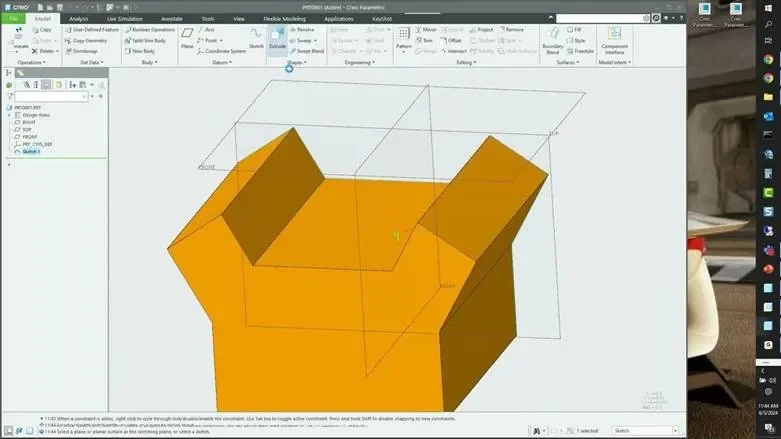
PTC Creo 11 What's New? PTC describes Creo 11 as a release with customer-driven usability improvements, productivity tools, and enhancements for electrification, composites, model-based definition, simulation-driven design, additive manufacturing, and subtractive manufacturing. PTC also says Creo+ combines Creo 11 functionality with cloud-based collaboration and license-management tools.
| Creo 11 update area | What changed | Why it matters |
|---|---|---|
| Productivity | Multibody sheet metal, surfacing selection, model-tree and shrinkwrap improvements | Faster daily modeling and assembly simplification |
| Composites | Transitions, laminate section, draping simulation, zone-based design, ply book clarity | Better composite product definition |
| Electrification | Cabling, harness visibility, ECAD-MCAD collaboration, layer transparency | Stronger electromechanical design workflows |
| MBD | Better tables, semantic query, GD&T Advisor improvements, STEP AP242 edition 3 support planned | Clearer product manufacturing information |
| Simulation | Creo Simulation Live, Creo Ansys Simulation Advanced, generative design updates | Earlier design validation and optimization |
| Additive manufacturing | Lattice connection and stochastic lattice improvements | Better additive-ready geometry workflows |
| Subtractive manufacturing | 4-axis rotary roughing and finishing, Area turning improvements | Stronger manufacturing preparation |
| Creo+ | Cloud-based collaboration and administration tools | Useful for distributed CAD teams |
For buyers comparing Creo 11 with other mechanical CAD options, the parametric CAD platform comparison points are a helpful reference because Creo 11 belongs in the professional product-development CAD category.
Creo 11 Productivity and Usability Updates
Creo 11 includes productivity updates that affect daily modeling work. PTC lists improvements to multibody design workflows, including support for multibody design of sheet metal parts, improved spot welding, faster selection of many surfaces using Box, Lasso, and Trace selection, selection priority for quilts, a Shrinkwrap option for collecting bodies from a referenced assembly into a part, and packaging optimization with enclosure-volume information.
Those changes matter because most engineering teams spend significant time on model cleanup, feature creation, assembly simplification, and geometry selection. A small productivity improvement can be valuable when it applies across many parts, assemblies, and design reviews.
For teams moving from general drafting into mechanical product design, the 2D drafting versus product CAD roles help explain why Creo 11’s model-centered workflow is different from drawing-first CAD.
Creo 11 Multibody and Sheet Metal Improvements
Creo 11 extends multibody design into sheet metal workflows. This is useful because sheet metal parts often require bends, flanges, reliefs, manufacturing constraints, and alternate body logic inside the same design process.
Multibody sheet metal support can help engineering teams explore part structure, manufacturing separation, and design intent more clearly. Instead of treating every design as a single simple solid, teams can work with multiple bodies where the product logic requires it.
That is especially useful for machinery, enclosures, brackets, panels, housings, and fabricated product designs. ProSoftStore can help buyers compare cad modeling software when sheet metal, multibody control, and mechanical documentation are part of the workflow.
Creo 11 Composite Design Updates
Creo 11 adds important composite-design improvements. PTC says Creo 11 expands functionality around transitions, laminate sections, and draping simulation, supports zone-based regions and zone stack recipes that automatically create plies, improves composite design and manufacturing clarity, and supports leading laser projection formats.
This matters for aerospace, transportation, consumer products, sporting goods, industrial equipment, and other industries using composite materials. Composite design is not just surface modeling. It involves ply definition, layup order, transitions, draping behavior, manufacturing documentation, and quality control.
For buyers evaluating whether Creo belongs in a high-end CAD workflow, the advanced Creo workflow signals help show why composite support is more than a basic modeling feature.
Creo 11 Electrification Improvements
Creo 11 also improves electrification workflows. PTC says Creo 11 strengthens cabling, harness, PCB, and ECAD-MCAD collaboration tools, including remove-locations capability with dynamic preview, expanded filtering, Undo/Redo options, harness setting changes during routing, improved cabling-tree visibility, and better ECAD layer transparency control.
These changes are important because mechanical products increasingly include electrical systems, wiring, harnesses, PCBs, sensors, batteries, and connected components. A mechanical CAD workflow that ignores electrical context can create fit, routing, serviceability, and manufacturability problems.
For buyers comparing Creo with AutoCAD-style workflows, the Creo AutoCAD workflow categories help clarify why Creo 11 is closer to product engineering than general drafting.
Creo 11 Model-Based Definition Updates
Creo 11 adds several model-based definition improvements. PTC says Creo 11 improves MBD tables with access to flat-to-screen or annotation planes, support for parameter callouts, semantic query for inheritance models, GD&T Advisor support for ISO 22081 general tolerances, combined simplified hole callouts for ISO models, and planned STEP AP242 edition 3 export support for sharing 3D models with semantic product manufacturing information.
This is important because MBD helps the 3D model carry product and manufacturing information instead of relying only on separate 2D drawings. For teams working with suppliers, inspection groups, manufacturing engineers, or digital-thread workflows, stronger MBD can reduce ambiguity.
If your team still relies on drawing sheets, the drawing title block information fields are still relevant. Creo 11 may improve model-based communication, but formal drawing identity, revision data, approval fields, and issue history remain important in many production environments.
Creo 11 Simulation and Generative Design Updates
Creo 11 strengthens simulation-driven design and generative design. PTC says Creo Simulation Live adds support for conjugate heat transfer between solid geometry and fluid bodies, Creo Ansys Simulation Advanced adds support for transient structural simulation with time-dependent boundary conditions, and generative design adds minimum feature-size constraints, bearing-load support, and planar-symmetry constraints.
These improvements matter because engineers can evaluate performance earlier in the design cycle. Instead of waiting for late-stage testing, teams can use simulation and optimization to refine ideas, compare design options, and reduce rework before manufacturing.
For buyers comparing CAD with analysis tools, the calculation tools and CAD data roles help separate technical computing, CAD modeling, and design validation workflows.
Creo 11 Additive Manufacturing Updates
Creo 11 adds additive manufacturing improvements focused on lattice work. PTC says Creo 11 includes a new lattice command for connecting two or more separate lattices, expanded stochastic lattice capabilities, and the ability to adjust simplified lattices using Warp.
That matters for teams designing lightweight structures, internal supports, engineered lattice regions, and additive-ready parts. Additive manufacturing is not only file export; advanced workflows may require engineering control over geometry, structure, and performance.
For simpler additive workflows, the basic 3D print CAD pathways may be enough. Creo 11 becomes more relevant when 3D printing is tied to engineered product performance.
The CAD-to-slicer workflow boundary is also important because Creo creates or prepares the model, while slicer software prepares that model for the printer.
Creo 11 Subtractive Manufacturing Updates
Creo 11 also improves subtractive manufacturing. PTC says High-Speed Milling now supports 4-axis rotary roughing and finishing toolpaths, and additional Area turning capabilities were added to 4-axis workflows.
These updates matter when CAD design is closely connected to machining. A model may need to be designed with manufacturability in mind, and toolpath-related capabilities can reduce friction between engineering and production teams.
For buyers comparing CAD design with CAM programming, the machining software handoff basics are useful. Creo 11 can support manufacturing-oriented design workflows, but dedicated CAM software may still be needed depending on machine, post-processor, and shop requirements.
Creo 11 and Creo+ Cloud Collaboration
Creo 11 also connects to Creo+, PTC’s SaaS CAD offering. PTC says Creo+ adds cloud-based collaboration, improved accessibility for engineers, and simplified CAD administration, while remaining upward-compatible with on-premises Creo and built on the same core technology so no data translation is needed.
That matters for distributed engineering teams, multi-location product groups, and organizations that want cloud-enabled CAD administration. The CAD model may be the same engineering asset, but the collaboration and administration layer can affect how teams deploy and manage software.
For ProSoftStore buyers, this is a licensing and workflow discussion as much as a feature discussion. The right choice depends on whether the team needs traditional on-premises CAD, SaaS collaboration, or both.
Creo 11 for Product Design Teams

Creo 11 is most relevant when the team builds controlled mechanical products. Product design teams care about modeling speed, design intent, composites, electronics packaging, simulation, manufacturing readiness, MBD, and long-term model control.
PTC describes Creo 11 as including tools for managing, manipulating, and understanding CAD models, along with enhancements across electrification, composites, MBD, simulation-driven design, and manufacturing.
For broader modeling decisions, the 3D software selection by deliverable can help buyers separate visual modeling, product design CAD, 3D printing tools, and manufacturing-focused software.
Creo 11 for Direct Editing and Imported Geometry
Creo 11’s productivity and modeling updates matter for teams that work with imported geometry or simplified assemblies. The Shrinkwrap option that collects bodies from a referenced assembly into a part can help simplify product data for downstream use.
This is useful when teams need lighter models for suppliers, manufacturing review, simulation, or packaging studies. Not every stakeholder needs the full native assembly structure.
For buyers who often receive outside CAD files, the direct-modeling preparation concepts can help explain why geometry cleanup, direct edits, and model simplification matter.
Creo 11 Compared with Autodesk Inventor Updates
Creo 11 and Autodesk Inventor Pro 2025 both belong to professional mechanical CAD conversations, but the release emphasis differs by vendor and workflow. Creo 11 focuses heavily on productivity, composites, electrification, MBD, simulation, generative design, and manufacturing. PTC’s official materials make those themes clear across its release coverage.
A buyer comparing update cycles should review the Inventor 2025 release-change pattern. Release notes are useful only when they are tied to real work: parts, assemblies, drawings, manufacturing output, file exchange, or simulation.
The best CAD update is the one that removes friction from the workflow your team repeats most.
Creo 11 Compared with GibbsCAM Updates
Creo 11 and GibbsCAM 2025 also sit in related but different parts of the manufacturing software stack. Creo 11 is a CAD release focused on product design, model definition, simulation, composites, electrification, and manufacturable geometry. GibbsCAM is a CAM system focused on CNC programming and machining workflows.
For buyers comparing manufacturing updates, the CAM upgrade workflow checkpoints can help separate CAD release value from CAM release value.
Many manufacturers need both categories. Creo may define the product and prepare engineering data, while CAM software prepares machine operations and toolpaths.
Creo 11 and CAD Software Categories
Creo 11 belongs in the advanced 3D CAD and mechanical product-development category. It should not be compared as if every CAD program does the same job. A drafting tool, a visual modeler, a CAM system, a slicer, and a parametric engineering platform all solve different problems.
The CAD classification for design teams helps buyers place Creo 11 in the right category before comparing price or features.
For a wider view of how broad the market is, the CAD software ecosystem overview can also help buyers understand why software selection should begin with workflow, not a long list of product names.
Creo 11 for Construction and Architecture Context
Creo 11 is not usually the first choice for construction documents, architectural plans, or residential layouts. Those workflows often need plans, elevations, sections, annotations, field documents, and building-specific drawing coordination.
For construction buyers, the construction CAD workflow sorting is a better starting point. For residential architecture, the residential drafting software route may be more relevant.
Creo 11 becomes useful in construction-adjacent work when the project involves engineered products, equipment, fixtures, manufactured assemblies, mechanical systems, or parts that require controlled CAD modeling.
Creo 11 for Visual Concept Modeling
Creo 11 can create advanced 3D product geometry, but it is not usually selected only for fast visual concept modeling. Visual design tools may be better for loose massing, interior studies, architectural concepts, and client presentation models.
The visual concept modeling route helps explain when a faster visual modeler may be more appropriate than a full mechanical CAD system.
Creo 11 makes the most sense when the concept must become a controlled product model with engineering intent, manufacturing data, simulation requirements, or documentation.
Creo 11 Cost and Upgrade Planning
Creo 11 upgrade value depends on whether the new tools solve real workflow problems. A team using composites, cabling, ECAD-MCAD collaboration, simulation, generative design, additive manufacturing, 4-axis machining, MBD, or multibody sheet metal may find more value than a team doing simple modeling.
The cost question should include license type, modules, training, workstation needs, support, data management, collaboration, manufacturing requirements, and implementation time. PTC’s Creo+ option also adds cloud-enabled collaboration and CAD administration considerations.
For budget planning, the CAD upgrade cost checklist can help buyers compare license price against productivity, compatibility, and rework reduction.
Creo 11 Workstation and Platform Planning
Creo 11 buyers should check workstation and platform requirements before upgrading. Advanced CAD workflows can involve large assemblies, simulation, composites, manufacturing, visualization, and supplier data, so hardware planning matters.
PTC’s Creo 11 materials note that users should visit PTC support for the most up-to-date platform support and system requirements.
For platform planning, the CAD workstation platform questions can help buyers review operating system fit, graphics requirements, collaboration workflows, and hardware limitations.
Creo 11 and 3D Printer Software Expectations
Creo 11 can help create advanced printable geometry, especially when additive manufacturing is engineering-driven. But a 3D printer package does not always replace CAD software, and slicer tools do not normally replace parametric product design.
The printer-bundled CAD expectations can help buyers understand why a printer’s included software may not be enough for engineering-grade models.
If your team needs controlled additive manufacturing geometry, Creo 11’s lattice and additive updates may be valuable. If the task is only simple hobby printing, a lighter CAD route may be more practical.
When Creo 11 Is Worth Reviewing?
Creo 11 is worth reviewing when your team uses composites, cabling, ECAD-MCAD collaboration, model-based definition, simulation, generative design, additive manufacturing, subtractive manufacturing, multibody sheet metal, or advanced product development workflows.
PTC’s release materials show that Creo 11 is not just a cosmetic update. It includes improvements across core modeling, composites, electrification, MBD, simulation, optimization, additive manufacturing, and subtractive manufacturing.
The strongest reason to upgrade is practical: Creo 11 should make the work your team already does faster, clearer, more accurate, or easier to validate.
How ProSoftStore Helps Buyers Choose?
PTC Creo 11 What's New? The release adds meaningful improvements for productivity, multibody sheet metal, composites, electrification, MBD, simulation-driven design, generative design, additive manufacturing, and subtractive manufacturing. For engineering buyers, the key is matching those improvements to real project needs.
ProSoftStore helps buyers compare CAD software by deliverable: mechanical parts, assemblies, composites, electrical routing, MBD, manufacturing data, 3D printing models, simulation-ready geometry, or construction-adjacent product design.
If your team needs controlled product modeling and engineering-grade design workflows, ProSoftStore can help you check current Creo versions and listed prices and choose a license that fits your CAD process.
FAQs
PTC Creo 11 What's New for everyday modeling?
PTC Creo 11 What's New for everyday modeling includes multibody workflow improvements, support for multibody sheet metal design, improved spot welding, faster surface selection through Box, Lasso, and Trace selection, quilt selection priority, Shrinkwrap improvements, and packaging optimization with enclosure-volume information. These updates are meant to reduce friction in daily modeling and assembly simplification.
PTC Creo 11 What's New for composites?
Ptc Creo 11 What's New for composites includes expanded transition functionality, laminate section improvements, draping simulation, zone-based regions, zone stack recipes that automatically create plies, better manufacturing preparation, clearer ply book drawings, and support for leading laser projection formats. These updates are most useful for teams designing lightweight composite products.
PTC Creo 11 What's New for electrification?
PTC Creo 11 What's New for electrification includes improved cabling, harness, PCB, and ECAD-MCAD collaboration tools. PTC specifically mentions remove-locations capability with dynamic preview, expanded filtering, Undo/Redo options, routing setting changes, improved cabling-tree visibility, and ECAD transparency control. These updates help mechanical and electrical teams coordinate more effectively.
PTC Creo 11 What's New for MBD?
PTC Creo 11 What's New for MBD includes better MBD tables, support for flat-to-screen or annotation planes, parameter callouts, semantic query for inheritance models, GD&T Advisor support for ISO 22081 general tolerances, combined simplified hole callouts for ISO models, and planned STEP AP242 edition 3 support for semantic product manufacturing information exchange.
PTC Creo 11 What's New for simulation?
PTC Creo 11 What's New for simulation includes Creo Simulation Live support for conjugate heat transfer between solid geometry and fluid bodies, Creo Ansys Simulation Advanced support for transient structural simulation with time-dependent boundary conditions, and generative design improvements such as minimum feature-size constraints, bearing-load support, and planar-symmetry constraints.
Ptc Creo 11 What's New for manufacturing?
PTC Creo 11 What's New for manufacturing includes additive and subtractive manufacturing updates. For additive workflows, Creo 11 adds tools for connecting separate lattices, expanded stochastic lattice capabilities, and simplified lattice adjustment using Warp. For subtractive workflows, High-Speed Milling supports 4-axis rotary roughing and finishing, and 4-axis Area turning adds more capability.
Is Creo 11 worth upgrading to?
Creo 11 may be worth upgrading to if your team uses composites, electrical routing, ECAD-MCAD collaboration, MBD, simulation, generative design, additive manufacturing, 4-axis machining, multibody sheet metal, or assembly simplification. If your workflow is limited to basic modeling, the value should be tested against actual parts and assemblies before upgrading.
Is Creo 11 the same as Creo+?
No. Creo 11 is the core CAD release, while Creo+ is PTC’s SaaS CAD solution. PTC says Creo+ combines the power and functionality of Creo 11 with cloud-based collaboration, improved accessibility, and simplified CAD administration. PTC also says Creo+ is upward-compatible with on-premises Creo and built on the same core technology, so no data translation is needed.